
Binoculars for Astronomy & Stargazing
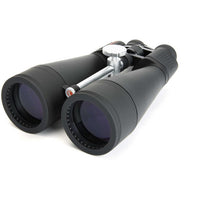
Binoculars are the easiest way to start exploring the night sky. They're quick to grab, give a wide, upright view, and show the Moon's craters, Jupiter's moons, star clusters and the Andromeda Galaxy. We carry astronomy binoculars from compact pairs to giant 20x80s, plus tripod adapters to hold them steady.
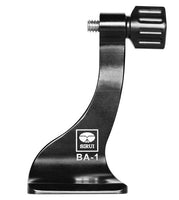
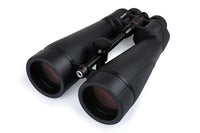
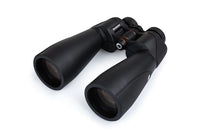
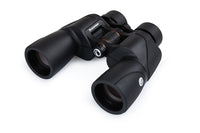
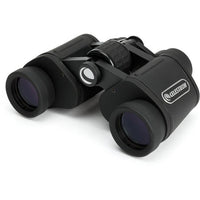
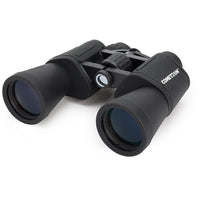
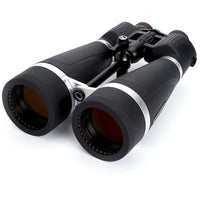
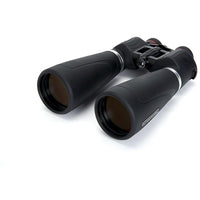
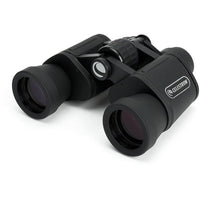
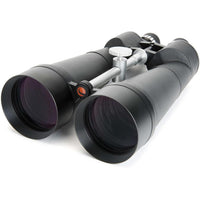
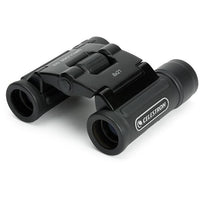
Shop by type: Best first pair: UpClose G2 7x35 or Cometron 7x50 · Giant astronomy binoculars: SkyMaster 15x70 or SkyMaster Pro ED 20x80 · Compact ED: Sirui 10x42 ED · Binocular tripod adapter · Solar binoculars
New to binoculars? Read our guide to choosing binoculars, including what numbers like 7x50 mean.







Astronomy binoculars buying guide
Why start with binoculars?
Many experienced astronomers keep a pair of binoculars within reach, and they're the best first step into the hobby. They're quick to use, show a wide field that makes finding things easy, and give an upright, natural view with both eyes. A good pair shows the Moon's craters and mountains, Jupiter's four largest moons, the Pleiades and other star clusters, the Orion Nebula, the Andromeda Galaxy and rich star fields along the Milky Way.
Which size for stargazing?
The first number is magnification and the second is the diameter of each front lens in millimeters. See Choosing Binoculars for the full explanation. For astronomy, these are the sizes that matter:
| Size | Hand-held? | Best for | Examples |
|---|---|---|---|
| 7x35 | Yes, easily | A light first pair, kids, casual scanning | UpClose G2 7x35 |
| 7x50 | Yes | The classic astronomy binocular: bright, wide and steady | Cometron 7x50, SkyMaster Pro ED 7x50 |
| 10x42 to 10x50 | Yes, with steady hands | More magnification for the Moon and star clusters; great for daytime use too | Sirui 10x42 ED |
| 15x70 | Briefly; best on a tripod | The step up for deep-sky objects: more galaxies, nebulae and clusters | SkyMaster 15x70, SkyMaster Pro ED 15x70 |
| 20x80 | No, needs a tripod | Maximum detail; Jupiter's moons at a glance, and Saturn shows its oval shape | SkyMaster 20x80, SkyMaster Pro ED 20x80 |
If you're not sure, choose a 7x50 or 10x50 for hand-held use, and add a 15x70 or 20x80 on a tripod when you want to see more.
Hand-held or on a tripod?
Everyone's hands shake a little, and magnification magnifies the shake. Most people can hold 7x to 10x binoculars steady enough, but at 15x and above, a tripod transforms the view: stars become sharp points and faint objects become much easier to see. Most binoculars have a threaded socket between the barrels for a binocular tripod adapter. Large binoculars like the SkyMaster 20x80 include a built-in mounting bar.
What to look for
- Prism glass: BaK-4 prisms give brighter, sharper, rounder images than cheaper BK-7 prisms.
- Coatings: "fully multi-coated" optics transmit the most light, which matters most for faint objects at night.
- ED glass: extra-low dispersion lenses reduce color fringing around the Moon and bright stars. You'll find it on the SkyMaster Pro ED and Sirui ED models.
- Eye relief: if you observe with glasses on, look for 15mm or more.
- Waterproofing: nitrogen-purged, waterproof binoculars won't fog inside on cold, dewy nights.
Binoculars and the Sun
Never point regular binoculars at the Sun, even briefly; it can cause permanent eye damage. To view sunspots and eclipses, use dedicated solar binoculars with certified solar filters built in.
Astronomy binoculars FAQ
Can you see planets with binoculars?
Yes, but they appear small. Binoculars easily show Jupiter's four largest moons lined up beside the planet, Venus's phases at higher magnification and the reddish color of Mars. At 20x on a tripod, Saturn looks noticeably oval because of its rings. For detail on the planets themselves, you'll want a telescope.
What are the best binoculars for stargazing beginners?
A 7x50 or 10x50 pair. They're bright enough for night use, light enough to hold, and inexpensive. The Celestron Cometron 7x50 is an easy recommendation.
Binoculars or a telescope first?
Binoculars are a great first step. They teach you your way around the sky, and they stay useful after you buy a telescope, for finding targets and sweeping the Milky Way. If you already know you want detailed views of the planets, a telescope gets you there faster.
Are zoom binoculars good for astronomy?
Generally not. Zoom binoculars usually have a narrower field and softer images than fixed-magnification binoculars at the same price. A fixed 7x50, 10x50 or 15x70 gives a better view of the night sky.
Can I try binoculars before I buy?
Yes. Visit our Denver store and we'll show you several pairs side by side, so you can feel the weight and see the difference for yourself.